
FDA Listing Inc.

FDA Listing Logo

FDA LISTING INC: EXPERIENCED ADVISORS FOR FULL-SERVICE FDA REGISTRATION & COMPLIANCE

+1 212 444 8202

U.S. FDA Registration

& Labeling Compliance Assistance

OTC Drug Labeling Requirements

Click the button below to see the service steps in an easy-to-follow graphic format.

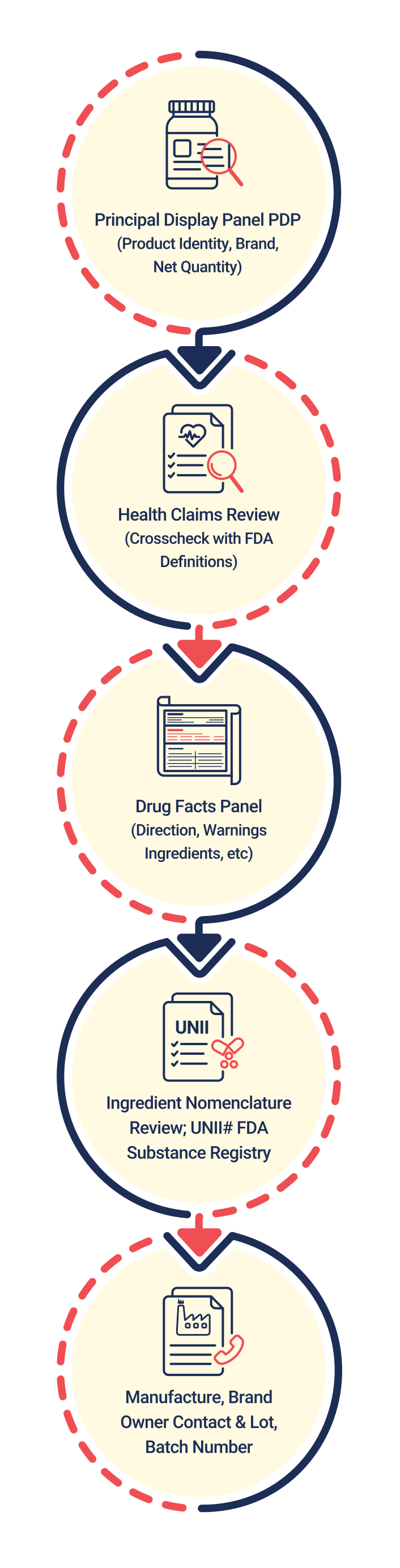
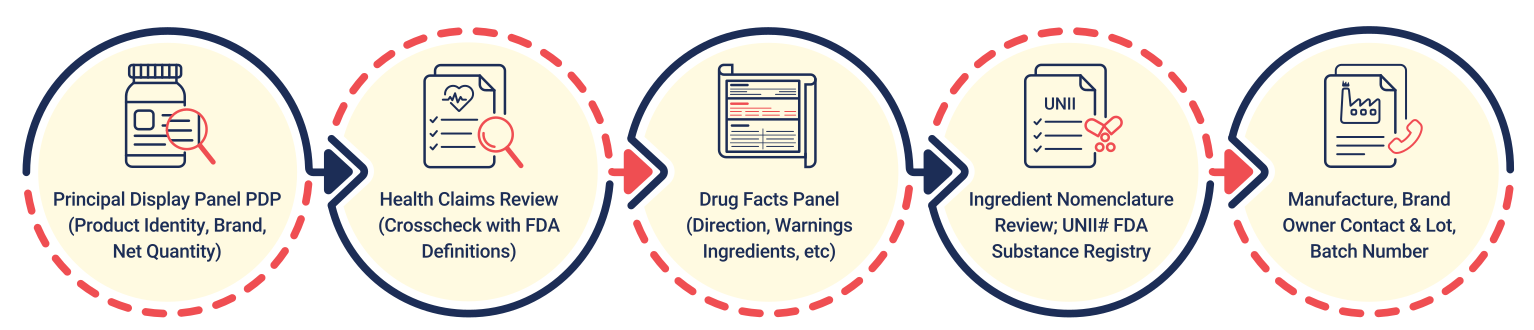
Infographic detailing FDA over-the-counter (OTC) drug labeling requirements, including active ingredients, uses, warnings, directions, and drug facts for consumer safety.

How is drug labeling regulated in the US?

All drugs marketed in the United States, regardless of where they are manufactured, must comply with applicable FDA drug labeling requirements under the Federal Food, Drug, and Cosmetic Act and relevant regulations. The product’s classification—such as OTC, prescription (Rx), homeopathic, or animal drug—determines which labeling requirements apply and what information must appear on the product label.


Furthermore, FDA drug labeling requirements may extend beyond the immediate package label to include accompanying materials, promotional content, and other information used to market the product.

Labeling deficiencies can delay U.S. customs release and result in FDA import detentions. In particular, incorrect or misleading drug labeling can create FDA compliance issues and delay product clearance. Consequently, such issues can disrupt supply chains, increase costs, and postpone U.S. distribution. Accurate FDA drug labeling is therefore essential for timely importation and continued U.S. market access.

The FDA regulates drug labeling to ensure that products marketed in the United States meet applicable safety, labeling, and consumer-use requirements. A well-developed drug label gives consumers practical information about what the product is, what it is used for, who should use it, and how to use it safely. Therefore, effective FDA drug label compliance requires clear, accurate, and consumer-friendly labeling that supports informed product selection and proper use. The information typically required on a drug label includes the following:

●  Product name and product identity

●  Active ingredient name and dose unit.

●  Drug purpose and the intended use.

●  Warnings and necessary precautions.

●  Circumstances to consult with a doctor.

●  Directions for use and other instructions.

●  List of inactive ingredients used in the formulation.

●  Other information and the questions section.

●  Manufacturer information and country of origin

●  Lot numbers for production and expiration date

A drug’s ‘intended use’ is the primary factor in defining which FDA regulations will apply to a specific drug label. Drug claims that go beyond the applicable FDA category will cause the drug to leap into an unapproved category, potentially leading to FDA enforcement actions. Therefore, creating and employing compliant content is imperative when designing a new drug label.

What are the FDA OTC drug labeling requirements?

An over-the-counter OTC drug is a nonprescription medication that consumers may purchase without a prescription and use safely and effectively when used as directed. The OTC Drug Facts Panel is a standardized section of the OTC drug labeling that presents essential product, safety, and use information in a prescribed order. It typically includes the following:

  • Active Ingredients: the substances responsible for the drug’s effects.
  • Purpose: what the drug is intended to treat or relieve.
  • Uses: conditions or symptoms the drug is used for.
  • Warnings: safety information, including potential side effects, drug interactions, and situations in which the drug should not be used.
  • Directions: how to use the drug, including dosage and frequency.
  • Other Information: storage instructions and other relevant details.
  • Inactive Ingredients: non-therapeutic substances in the formulation.
  • Questions or Comments: contact information in case further information is needed.

The drug fact panel requirements may vary slightly depending on the type of OTC drug label. For example, OTC homeopathic labeling in the U.S. must include a clear statement identifying it as homeopathic, and potency is typically shown as a number followed by either an X or a C. Additionally, these labels should consist of an FDA disclaimer since most homeopathic products are not FDA-approved.

How about OTC label font size and format requirements?

The U.S. FDA proposes detailed format requirements for Drug Fact panels on OTC drug labels, including alignment, punctuation, borders and lines, font size, and graphics. To improve readability for the elderly, the FDA requires a minimum font size (6.7 points), though a smaller size (6.0 points) is allowed if space is limited. Under certain conditions, the FDA permits minor package label adjustments where more than 60% of the surface area is needed for required labeling.

It is important to note that the FDA considers the entire container’s surface for labeling, excluding areas like the tops and bottoms of cans or the necks of bottles. As a result, products that cannot meet these requirements must be redesigned, as the FDA generally does not grant exemptions for size issues.

How can we assist?

FDA Listing Inc. offers expert assistance with FDA OTC drug label regulations, including reviewing compliance, evaluating the need for additional directions or warnings, and creating FDA-compliant packaging and labeling.

We review your label from both regulatory and US customer perspectives, offering suggestions for appropriate wording based on standard American English. Moreover we consider design implications and how the average American customer might interpret the label, ensuring your product resonates well in the US market. For assistance, please call or email us.

Service Details & Fees

Cosmetic Label Review Icon

OTC Drug Label review

Time Required Icon

Time Required

Current Label Assessment Icon

Current Label Assessment

60 Days Unlimited Revisions Icon

60 Days Unlimited Revisions

Discount on Multiple Batches Icon

Discount on Multiple Labels

695 USD

4-5 Days

_______ Related Services _______

Frequently Asked Questions (FAQ)

No, the FDA does not pre-approve or certify OTC drug labels. As long as your product follows an established FDA OTC Monograph order, you can go to market, but brand owners and manufacturers are fully legally responsible for total label compliance.

Making therapeutic claims (such as “treats acne,” “cures eczema,” or “prevents sunburn”) or including active ingredients governed by an OTC Monograph (like sunscreens or topical analgesics) reclassifies a cosmetic as an OTC drug requiring Drug Facts labeling.

OTC drug packaging must feature a standardized Drug Facts panel, product statement of identity, net quantity of contents, lot number, expiration date, and manufacturer or distributor contact details.

The Drug Facts panel must follow a strict, uniform order: Active Ingredients, Purpose, Uses, Warnings, Directions, Other Information (storage conditions), and Inactive Ingredients.

  • Active Ingredients: The therapeutic substances responsible for treating or preventing a condition (e.g., salicylic acid or zinc oxide).

  • Inactive Ingredients: Non-medicinal components such as binders, preservatives, colors, fragrances, or emulsifiers listed alphabetically.

Products with improper, missing, or non-compliant Drug Facts labeling are legally considered misbranded. This can lead to FDA import detentions at the U.S. border, warning letters, or mandatory product recalls.

Service Details & Fees

Cosmetic Label Review Icon

OTC Drug Label review

695 USD

Time Required Icon

Time Required

4-5 Days

Current Label Assessment Icon

Current Label Assessment

60 Days Unlimited Revisions Icon

60 Days Unlimited Revisions

Discount on Multiple Batches Icon

Discount on Multiple Labels

_______ Related Services _______