

FDA LISTING INC: EXPERIENCED ADVISORS FOR FULL-SERVICE FDA REGISTRATION & COMPLIANCE
+1 212 444 8202
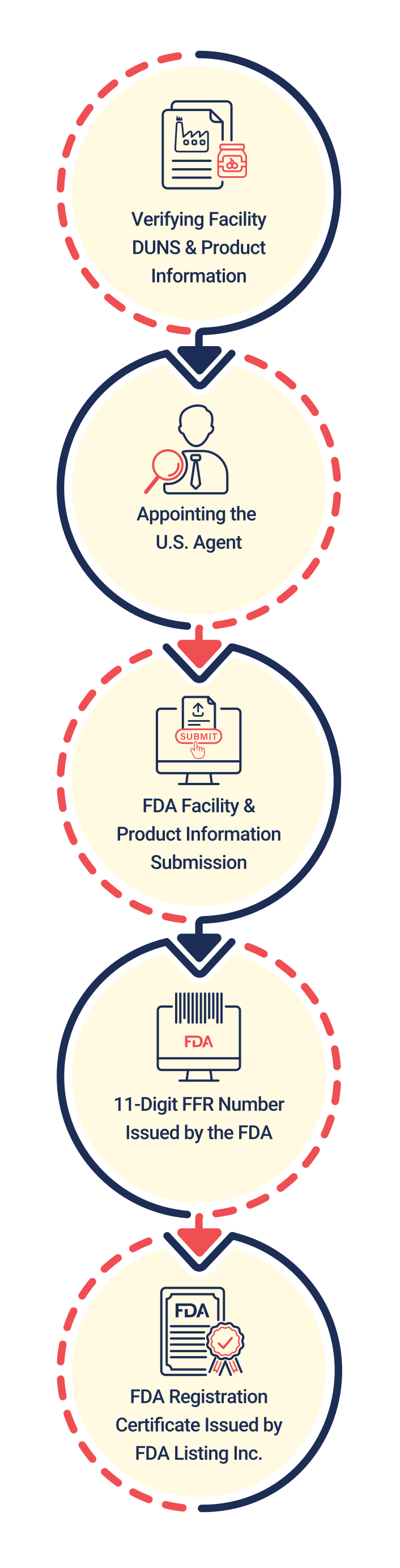
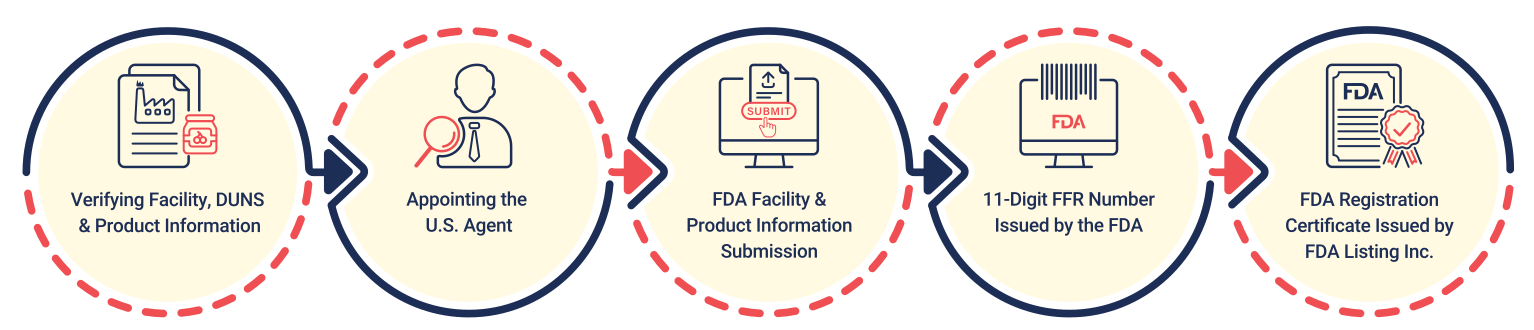
Click the button below to see the service steps in an easy-to-follow graphic format.
Under the U.S. FDA Bioterrorism Act of 2002, all domestic and foreign facilities that manufacture, process, pack, or store food, beverages, or dietary supplements for the U.S. market must register with the FDA. Registered facilities are issued a Food Facility Registration (FFR) number. Additionally, intermediary firms, including traders, importers, and distributors, must also register if they handle or store food products in a facility or warehouse.
Once a facility completes registration, the FDA assigns an 11-digit Food Facility Registration (FFR) number. This number identifies the manufacturer or trader’s registration and is required for U.S. customs clearance. It’s notable that, due to the FDA’s confidentiality policy, registration data is never made public. Consequently, the official registration or renewal notice sent by the FDA via email serves as the only proof of registration the facility will receive.
When applying for a food facility registration number, the following information is required:
● Unique Facility Identifier (9-digit DUNS number)
● Facility name, address, and emergency contact
● Information on the owner, operator, or agent in charge
● General product categories and types of activities conducted
● Any trade names (brand names)
● U.S. Agent who has accepted the designation (for international facilities)
1- Obtaining a DUNS number via the D&B portal or partner office
2- Verification of facility information and products
3-Submission of the facility info to the FDA to get the FFR number
4- Issuing the Certificate of registration, valid for one year
The FDA registration is generally completed within 1-2 days if all information, including the DUNS number (UFI), is adequately provided.
FDA-registered food facilities must renew their registration every even-numbered year, between October 1 and December 31—regardless of the initial registration date. For example, a facility registered in 2023 must renew by the end of 2024, then again in 2026, and so on.
In addition to the biennial renewal requirement, food facilities must update their FDA registration within 60 days of any changes. These changes may involve various factors, such as relocation, a change in ownership, updates to product categories, or alterations to the DUNS number or associated details. If a registered food facility permanently ceases operations, it must cancel its FDA registration within 60 days.
Foreign companies must appoint a U.S. agent to complete FDA registration. This agent acts as the primary contact for all FDA communications and must be knowledgeable about FDA compliance requirements. Even small errors in the registration process can cause delays or problems at U.S. ports. Using an independent FDA agent, rather than a trade partner, also reduces the risk of conflicts of interest.
The FDA does not approve or disapprove U.S. agent firms. During registration, renewal, and updates, the FDA only verifies that the designated agent has accepted the role. Once confirmed and reviewed, the company is issued an 11-digit Food Facility Registration (FFR) number, provided the submitted Unique Facility Identifier (UFI) is accurate.
Although the FDA does not issue certificates, FDA Listing Inc. provides an FDA registration certificate, valid for one year, upon completion of the registration process. This certificate serves as proof of registration and can be shared with U.S. customs, importers, distributors, and other commercial partners.
Before any food shipments enter the United States, a Prior Notice shall be filed with the FDA. This requirement applies to all food items, including samples intended for trade shows or personal use. After filing the Prior Notice, the submitter will receive a confirmation number, which will be used during the shipment process. Firms can access the FDA Prior Notice portal, follow the instructions to create an account, and submit their shipment prior notices. Alternatively, the company’s customs broker or international shipping firms (e.g., DHL, FedEx, TNT) can file the Prior Notice on behalf of the company.
Complying with FDA food facility registration requirements can be complex and time-consuming, often requiring specialized expertise. FDA Listing Inc. simplifies the process and helps your firm meet FDA obligations in the following ways:
Food facility registration with the FDA
Biennial renewal and registration updates
Acting as a U.S. Agent for foreign food facilities
For assistance with U.S. agent designation, registration renewal, or any FDA food facility compliance matter, please contact us by email or phone.
Service Details & Fees
Food Facility Registration
Time Required
DUNS Number
U.S. Agent
FDA Registration Certificate
FDA Registration Updates
395 USD
1-2 Days
95 USD
_______ Related Services _______
Frequently Asked Questions (FAQ)
Most food facility registrations are complete within 1-2 days. A common reason for the delay is when the DUNS address does not match the provided facility address.
No, the FDA does not charge initial or annual fees for food facility registration. The only fees paid will be those of registering agency service fees.
No product testing or laboratory reports are required during FDA registration. The manufacturer is always responsible for the safety of the food item entering the US market.
No submission of food safety documentation or GMP is required during FDA registration.
Since 2023, the FDA has been regularly reviewing FFR records and canceling registrations if the DUNS number is an inaccurate representation of the FFR data.
? If you are a merchant office involved in the shipment paperwork but the food items are shipped directly to the destination by the original manufacturer, your facility does not need to be registered with the FDA. If you are an intermediary firm taking ownership of food items, such as handling or storing them in a warehouse, you must register with the FDA.
FDA registration is the primary requirement; there may be additional requirements, for example, if the facility manufactures shelf-stable low-acid or acidified foods. Certain food items may need to consult other U.S. government agencies; for example, food products with organic health claims may consult the USDA before importation. Companies importing alcoholic beverages must obtain a permit from the Alcohol and Tobacco Tax and Trade Bureau (TTB).
Although registered facilities are required to consent to the FDA’s permitting inspection, the FDA may immediately plan to inspect the registered facility.
No, a food facility will not receive a new registration number (FFR) when it renews its current registration.
The FFR number is confidential and must only be disclosed to your customs broker for clearance or when submitting a prior notice.
Yes, manufacturers of food color additives, including specific color additives, must register with the FDA before they can market or use any color additive in human or animal food.
The actual manufacturing facility must register with the FDA. If the exporter or brand owner stores food at a facility, that facility must also register.
FDA registration is the primary requirement; there may be additional requirements, for example, if the facility manufactures shelf-stable low-acid or acidified foods. Certain food items may need to consult other U.S. government agencies; for example, food products with organic health claims may consult the USDA before importation. Companies importing alcoholic beverages must obtain a permit from the Alcohol and Tobacco Tax and Trade Bureau (TTB).
Although registered facilities are required to consent to the FDA's permitting inspection, the FDA may immediately plan to inspect the registered facility.
No, a food facility will not receive a new registration number (FFR) when it renews its current registration.
The FFR number is confidential and must only be disclosed to your customs broker for clearance or when submitting a prior notice.
Yes, manufacturers of food color additives, including specific color additives, must register with the FDA before they can market or use any color additive in human or animal food.
The actual manufacturing facility must register with the FDA. If the exporter or brand owner stores food at a facility, that facility must also register.
Frequently Asked Questions (FAQ)
Most food facility registrations are complete within 1-2 days. A common reason for the delay is when the DUNS address does not match the provided facility address.
No, the FDA does not charge initial or annual fees for food facility registration. The only fees paid will be those of registering agency service fees.
No product testing or laboratory reports are required during FDA registration. The manufacturer is always responsible for the safety of the food item entering the US market.
No submission of food safety documentation or GMP is required during FDA registration.
Since 2023, the FDA has been regularly reviewing FFR records and canceling registrations if the DUNS number is an inaccurate representation of the FFR data.
If you are a merchant office
involved in the shipment paperwork but the food items are shipped directly to the destination
by the original manufacturer, your facility does not need to be registered with the FDA. If you
are an intermediary firm taking ownership of food items, such as handling or storing them in a
warehouse, you must register with the FDA.
FDA registration is the primary requirement; there may be additional requirements, for example, if the facility manufactures shelf-stable low-acid or acidified foods. Certain food items may need to consult other U.S. government agencies; for example, food products with organic health claims may consult the USDA before importation. Companies importing alcoholic beverages must obtain a permit from the Alcohol and Tobacco Tax and Trade Bureau (TTB).
Although registered facilities are required to consent to the FDA’s permitting inspection, the FDA may immediately plan to inspect the registered facility.
No, a food facility will not receive a new registration number (FFR) when it renews its current registration.
The FFR number is confidential and must only be disclosed to your customs broker for clearance or when submitting a prior notice.
Yes, manufacturers of food color additives, including specific color additives, must register with the FDA before they can market or use any color additive in human or animal food.
The actual manufacturing facility must register with the FDA. If the exporter or brand owner stores food at a facility, that facility must also register.
FDA registration is the primary requirement; there may be additional requirements, for example, if the facility manufactures shelf-stable low-acid or acidified foods. Certain food items may need to consult other U.S. government agencies; for example, food products with organic health claims may consult the USDA before importation. Companies importing alcoholic beverages must obtain a permit from the Alcohol and Tobacco Tax and Trade Bureau (TTB).
Although registered facilities are required to consent to the FDA's permitting inspection, the FDA may immediately plan to inspect the registered facility.
No, a food facility will not receive a new registration number (FFR) when it renews its current registration.
The FFR number is confidential and must only be disclosed to your customs broker for clearance or when submitting a prior notice.
Yes, manufacturers of food color additives, including specific color additives, must register with the FDA before they can market or use any color additive in human or animal food.
The actual manufacturing facility must register with the FDA. If the exporter or brand owner stores food at a facility, that facility must also register.
Service Details & Fees
Food Facility Registration
395 USD
Time Required
1-2 Days
DUNS Number
95 USD
U.S. Agent
FDA Registration Certificate
FDA Registration Updates

_______ Related Services _______