

FDA LISTING INC: EXPERIENCED ADVISORS FOR FULL-SERVICE FDA REGISTRATION & COMPLIANCE
+1 212 444 8202
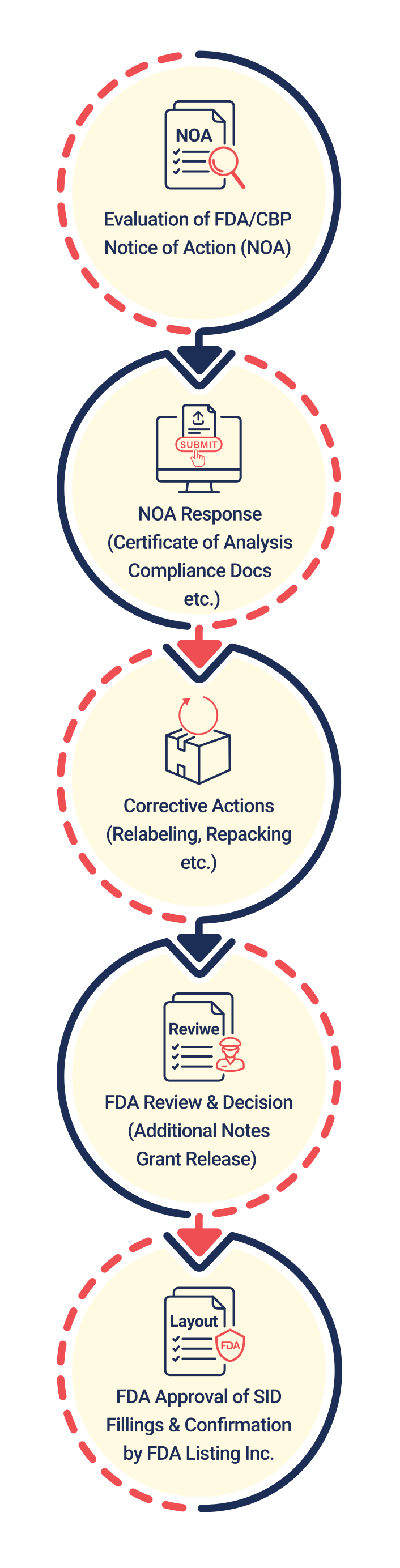
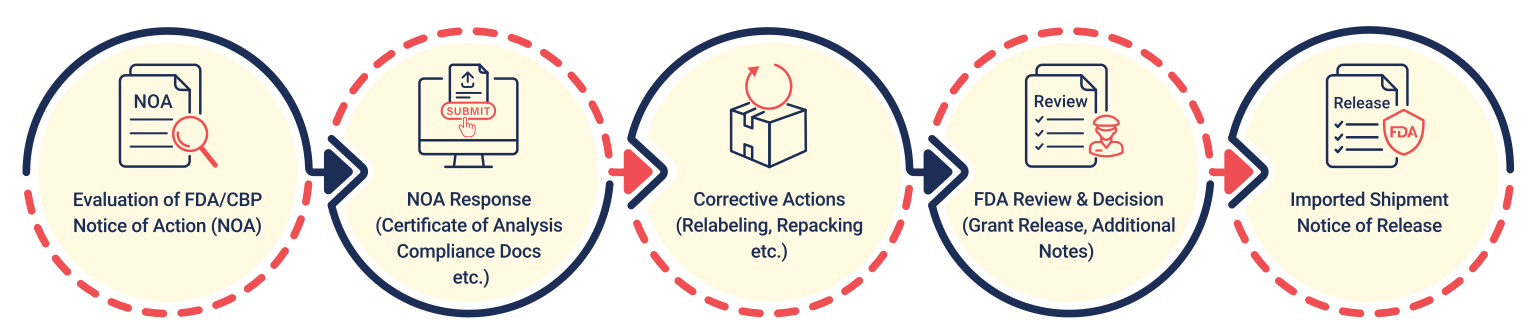
Click the button below to see the service steps in an easy-to-follow graphic format.
FDA Import Alerts help protect U.S. consumers when imported products or firms may violate FDA requirements. Products or firms on an Import Alert’s Red List may be subject to Detention Without Physical Examination (DWPE), allowing FDA to detain future shipments without physically examining or testing each entry. Companies can check FDA’s real-time Import Alert database to determine whether a product or firm is listed.
Import Alerts can disrupt U.S. supply chains and delay product entry. Companies may request removal from DWPE by providing evidence that the conditions leading to the alert have been corrected and that future shipments are expected to comply with FDA requirements. FDA publishes removal procedures and alert-specific criteria, which may vary by Import Alert.
The FDA uses the Red, Yellow, and Green Lists to regulate the import of products based on safety concerns:
To seek removal from an FDA Import Alert Red List—and, where applicable, placement on the Green List—a company must submit an evidence-based request demonstrating that it identified and corrected the conditions that led to the violation. The submission should address the root cause, corrective actions, and preventive controls implemented to ensure future shipments comply with FDA requirements.
Depending on the Import Alert, FDA may also require evidence of at least five consecutive non-violative commercial shipments released by FDA, often supported by private laboratory analyses. Supporting documentation may include updated SOPs, quality-control and surveillance records, corrective-action documentation, and independent laboratory or audit reports. FDA evaluates each request based on the removal criteria specified in the applicable Import Alert.
There may be occasions when your company is not on the Import Alert Red List. Yet, you received written detention communication from the FDA, known as a Notice of FDA Action (NOA), specifying the FDA’s concern regarding your product’s safety, efficacy, or other regulatory compliance violations. Most FDA Notices of FDA Action are generally involved in either of the following:
1) Product sampling and testing
2) Product labeling review
3) Field examination of the product
The FDA can require a sample of your product as part of its regulatory oversight. Each sample is tested in the laboratory to ensure it meets safety standards. FDA may also review the product label to ensure it complies with the FDA labeling requirements, incorporating the review of the list of ingredients, warnings, directions for use, drug, nutrition, or supplement fact panel info, health claims, color additives, product identity, etc., depending on the nature of the product in query. The FDA’s field examination ensures that your product was manufactured correctly, packaged, stored, and transported under the right conditions.
In most cases, the issues raised by the NOA may be addressed by submitting a reconditioning proposal to the FDA, which needs to be approved by the FDA office. Reconditioning a product involves modifying it to comply with FFDCA standards, such as relabeling the goods to address labeling issues or re-sterilizing products to address microbial contamination.
Responses to a Notice of Action can be submitted through the FDA Import Trade Auxiliary Communication System (ITACS) or directly to the local FDA Import office. Responding promptly and professionally to the FDA’s notice is imperative to avoid potential supply chain disruptions. If the importer doesn’t respond to the detention notice or fails to resolve the violation, the FDA may refuse the product’s entry into the U.S. and issue a Notice of Refusal. Once the FDA rejects a shipment, obtaining a release becomes much more challenging.
If you have issues with current detention, FDA Listing Inc. can help you gather the required documentation and submit a complete and evidence-based petition to the FDA for detention release. We can also work with you to create a corrective action plan to bring your products back into compliance and to submit a formal petition to request removal from the Import Alert. Please feel free to call or email us for assistance.
Service Details & Fees
Import Alert Petition
Detention Assistance
Time Required
30-Min Initial Consultation
FDA Communications
Discount on Services (15-25%)

995 USD
995 USD
7-10 Days
_______ Related Services _______
An FDA detention means your product appears to violate federal safety, labeling, or registration rules. The shipment is held at the port until you prove compliance or correct the issue.
An Import Alert places a company, product, or country on automatic hold—known as Detention Without Physical Examination (DWPE)—due to past violations, meaning future shipments are detained without physical inspection.
You must submit evidence to the FDA within a strict time window, such as accredited lab test results, corrected labeling, or compliance documentation, to prove the shipment complies.
The Red List includes specific companies or products subject to automatic detention. The Green List includes companies exempt from automatic detention under country-wide or category-wide alerts.
Removal requires filing a formal petition showing you fixed the root cause, implemented corrective actions, and typically successfully cleared 5 consecutive commercial shipments through private testing.
If you fail to respond or overcome the detention notice, the FDA issues a formal Refusal of Admission. The product must then be destroyed or exported under customs supervision within 90 days.
Service Details & Fees
Import Alert Petition
995 USD
Detention Assistance
995 USD
Time Required
7-10 Days
30-Min Initial Consultation
FDA Communications
Discount on Services (15-25%)

_______ Related Services _______