

FDA LISTING INC: EXPERIENCED ADVISORS FOR FULL-SERVICE FDA REGISTRATION & COMPLIANCE
+1 212 444 8202
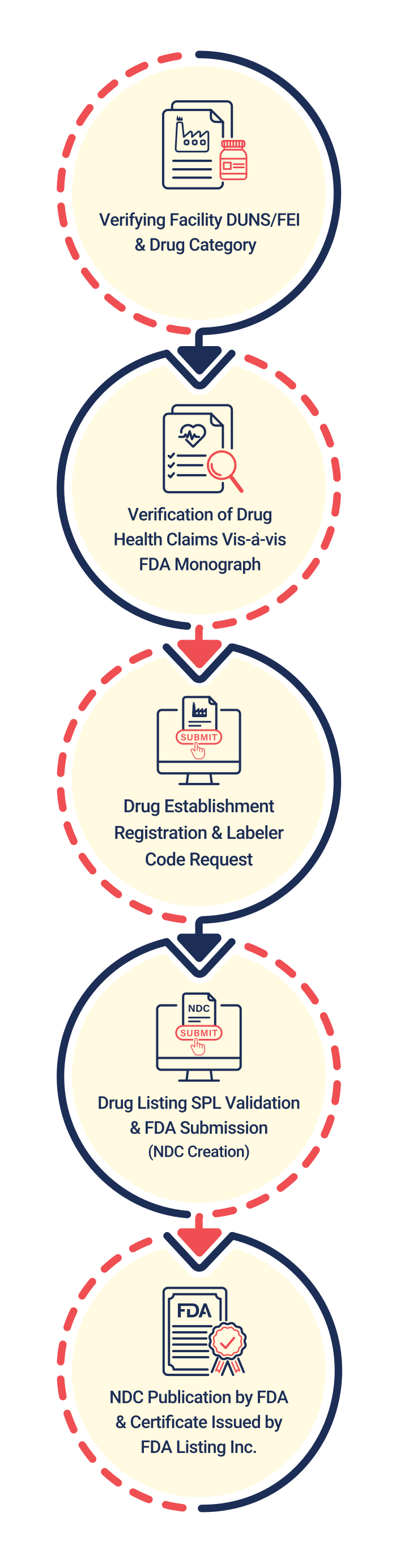
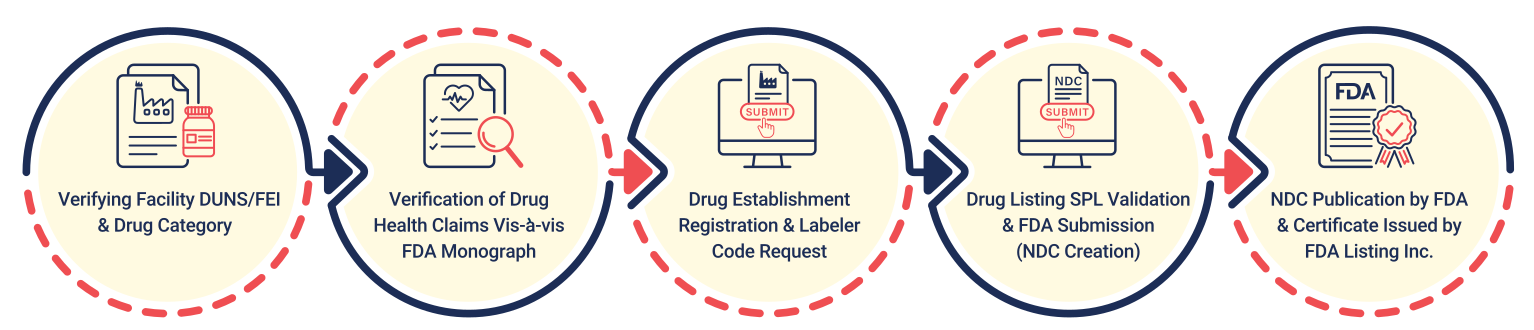
Click the button below to see the service steps in an easy-to-follow graphic format.
The FDA classifies Over-the-Counter (OTC) drugs as safe and effective, allowing purchase without a prescription. The U.S. market comprises over 300,000 OTC products across approximately 100 therapeutic categories, such as acne creams, dry-eye drops, sunscreens, and sanitizers. To enter the U.S., all OTC products must follow FDA-approved formulation guidelines, known as FDA monographs.
All OTC products outside the FDA monograph system are considered “Unapproved Drugs.” This includes products marketed without formal FDA approval, meaning they have not undergone FDA review for safety or effectiveness. Examples include Unapproved Homeopathic remedies and specific OTC animal drugs. Regardless of whether a product falls under a monograph, proper FDA drug establishment registration and OTC drug listing are essential to ensure FDA compliance and secure U.S. market access.
The FDA OTC monograph acts as a “rule book” for each therapeutic category, detailing approved active ingredients, concentration limits, and labeling requirements that determine whether an OTC drug is considered safe and effective. The FDA maintains several monographs across many therapeutic areas. You can search these monographs using keywords for therapeutic category, ingredients, or dosage forms, or review the complete list of FDA-proposed monographs available on the official FDA website below.
1. OTC Drug Establishment Registration …………(1-2 days)
2. Obtaining Labeler Code ………………………………(3-4 days)
3. OTC Drug Label Compliance ……………………..(5-7 days)
4. OTC Drug Listing ………………………………………..(3-4 days)
According to the FDA, all OTC drug establishments that formulate, process, pack, manufacture, or distribute OTC drugs—including APIs—in the U.S. must register and list all their products with the agency. This requirement applies to both domestic and foreign manufacturers, processors, packers, and labelers of OTC, API, generic, homeopathic, and “unapproved” drugs. Applicants must submit their registration electronically using the Structured Product Labeling (SPL) format. A valid DUNS number for the manufacturing site is required before FDA submission. To obtain a DUNS number, see the list of DUNS regional offices and worldwide partners.
Companies outside the U.S. must have a U.S. agent assigned to them, who will be the FDA’s primary point of contact. Drug establishment registrations must be renewed annually before December 31. Upon completion of drug establishment registration submission, the establishment record will be published on the FDA Drug Establishment Registration Site.
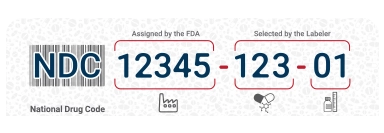
Labeler code, or NDC labeler code, is a 5-digit company identification number the FDA assigns to the manufacturer or distributor of OTC drugs. A labeler code is required to submit an OTC drug listing and obtain an NDC code. NDC code is a 10-digit identification number for all OTC drugs sold in the US that is also used for tracking, billing, and insurance purposes. Generally, the NDC labeler code is assigned only once to each company and typically does not expire.
Drug manufacturers must submit an electronic request in SPL format containing the company’s primary location, operation, and contact information to obtain the labeler code. Foreign entities must have a U.S. agent to submit a labeler code application. For more information, see What an NDC is and how it can be created.
A valid DUNS number is required before submitting a labeler code application; to obtain DUNS, see the list of DUNS regional offices and worldwide partners. When applying for a DUNS number for FDA registration, particularly for OTC drug registration, you must provide a valid physical address and complete the labeler code procedure. A virtual address, such as a mailbox address, is not acceptable.
FDA neither reviews nor does pre-approve the label of the OTC drug products. Instead, it is the responsibility of the OTC drug manufacturer or distributor to comply with FDA OTC drug labeling requirements published by the FDA. A drug’s ‘intended use’ is critical in determining which FDA regulations will apply to its labeling. Claims that exceed the designated FDA category can push the drug into an unapproved category, risking FDA enforcement actions. Therefore, developing compliant content is crucial when designing a new drug label.
The OTC drug label must comply with a specific standardized format and content requirements for the OTC Drug Fact Panel (DFP) and Principal Display Panel (PDP) sections. You can learn more about OTC Drug Labeling on our complete guide page.
As a final step, the OTC drug manufacturer and distributor must list the drug, submit the product’s label to the FDA, and obtain a 10-digit NDC code. The submission must contain all important information about the drug, such as active and inactive ingredients, inner and outer packaging, container type, FDA monograph number or citation, marketing start and end dates, drug facts panel information, etc. The OTC drug listing form must be submitted electronically using SPL format.
Once an OTC drug listing is complete, the registrant will receive the OTC drug NDC number. The drug registration record will be published in the FDA NDC directory within a few days after submission. All OTC drug listings must be renewed or certified annually between October 1 and December 31.
1) What if the brand owner of the drug is different from the manufacturer?
If the drug manufacturer differs from the brand owner, as is often the case in Private Label Distributor (PLD) and Contract Manufacturer (CMO) arrangements, the brand owner or PLD must also take steps 2-4 on the abovementioned process. In other words, if the manufacturer of the drug items does not own the brand of the drug product, then the brand-owner firm will obtain the labeler code and list the OTC drug for the second time. The regulatory details of this requirement are posted in the U.S. Federal Register article.
2) Are there any FDA fees involved with OTC registration?
Aside from the registration service fees, there is no FDA fee to be paid at the time of OTC drug registration. However, under the FDA’s OTC Monograph Drug User Fee Program (OMUFA), all facilities involved in OTC manufacturing, either own-brand MDF or contract manufacturer CMO, must pay an annual user fee in the subsequent fiscal year. There are no FDA yearly user fees for the distributor of OTC products. For more information about the current year’s FDA user fees, please visit the FDA OMUFA website.
3) What Are the Post-Drug Registration Steps & Requirements?
Once OTC drug registration is complete, the NDC record is published in the FDA National Drug Code (NDC) Directory. Under FDA confidentiality rules, when both a private-label distributor and a contract manufacturer submit NDC information, only the distributor’s NDC will be published. In contrast, the manufacturer’s NDC remains confidential—unless the manufacturer is also the brand owner, in which case its NDC will be published.
OTC drug registration must be updated annually to reflect the current manufacturing and marketing status. If an OTC product is no longer marketed, the drug listing must be updated to show its marketing category as “complete.”
OTC drug registration with the FDA does not automatically trigger a facility inspection; however, the FDA may request operational details through official communications (such as FDA Form 4003), which must be accurately completed and submitted by the specified deadline.
4) What is the DUNS number, and how can you get it for an overseas firm?
The DUNS number is a unique nine-digit identifier for businesses required for the FDA registration process. Dun & Bradstreet, a US-based company, issues the DUNS number. Most US-based and Canadian companies can have a DUNS number issued without any fees. To obtain the DUNS number overseas, you can either create an account and submit a DUNS application on the DUNS Import Safety Portal or contact the local DUNS office in the foreign country. See more instructions and details on our DUNS page.
Compliance with FDA requirements for OTC drug listing can be complex and time-consuming, often requiring specialized regulatory knowledge. FDA Listing Inc. streamlines the process, helping your firm meet FDA obligations in the following ways:
OTC drug establishment registration with the FDA
OTC drug product listing and SPL data submission
U.S. Agent services for foreign OTC drug establishments
OTC drug labeling review for FDA compliance
Please email or call us if you need assistance with product listing, U.S. Agent designation, or any OTC drug registration and listing matter.
Service Details & Fees
Drug Establishment Registration
OTC Drug Listing
Time Required
U.S. Agent
Obtaining NDC codes
OTC Label Assessment
FDA Registration Certificate
495 USD
495 USD
4-5 Days
_______ Related Services _______
Frequently Asked Questions (FAQ)
U.S. FDA requires filling of Prior Notice before food shipments enter the United States. This will include Prior Notice for food samples for trade shows or consumption. After filling the Prior Notice, you will be assigned with a confirmation number that will be used by your U.S. customs broker for the shipment release. A Prior Notice can also be filed by your own compnay or international transit firms as well as shipment companies (DHL, FedEx, TNT, etc).
Frequently Asked Questions (FAQ)
U.S. FDA requires filling of Prior Notice before food shipments enter the United States. This will include Prior Notice for food samples for trade shows or consumption. After filling the Prior Notice, you will be assigned with a confirmation number that will be used by your U.S. customs broker for the shipment release. A Prior Notice can also be filed by your own compnay or international transit firms as well as shipment companies (DHL, FedEx, TNT, etc).
Service Details & Fees
Drug Establishment Registration
495 USD
OTC Drug Listing
395 USD
Time Required
4-5 Day
U.S. Agent
Obtaining NDC codes
OTC Label Assessment
FDA Registration Certificate
_______ Related Services _______